


- Brief us
- hello@flencreative.com
- Tel. +34 937 606 800
- Our Office
- Follow us
The Secret of Home Staging

Adriana Rodríguez de Almeida.
REAL ESTATE Consulting & Coaching /
¿Qué es el Home Staging y para qué sirve?
Investigamos acerca de esta herramienta inmobliaria, sus características, alcance y experiencias que con gran éxito funciona internacionalmente en propiedades
a la venta bajo la gestión del Real Estate.
Entrevistamos a Eduardo Mendoza, experto stager nacido en Lima y radicado en Seattle, Estados Unidos, quien nos brinda una visión muy integradora y profesional sobre el concepto de intervenir espacios para ser vendidos, que a grandes rasgos define el Home Staging.

Mendoza studied Business Administration in his native country before his parents chose Seattle in 1997 as the city for their future. It was this former whaling town, transformed into the “Emerald City” (known as such for the extensive green expanse that dominates a whimsical landscape punctuated by deep blue lakes), that definitively opened the doors to the art world for him. There, he first trained in graphic design and then in interior design, earning a degree in Hospitality (Hotel and Tourism Management) from The Arts Institute of Seattle. While studying, he worked for Amazon, VacationSpot, and Microsoft/Expedia. This is the largest city in Washington State, whose Space Needle (the emblematic space needle in the downtown district) imbues it with a futuristic air, making it home to companies with the highest level of technological development in the United States. “At the same time, I decided to take classes related to residential design. When I realized I enjoyed it, I started buying houses and condominiums to resell. I would buy them, renovate them, and sell them,” says the Peruvian-American home stager, who makes a living from a profession that is well-established throughout the United States.
She began by working freelance with one of the leading professionals in the field, remodeling houses with the goal of attracting buyers. There, she learned that the only way to increase a property’s selling price was through “staging,” a term that refers to preparing a house optimally for sale in order to enhance its value.
Due to her distinctive visual style and captivating personality at the helm of The Enhanced Home (a company she founded in 2001), Mendoza quickly attracted the attention of local media, participating in NBC’s Evening Magazine and Univision, as well as being featured in local and international magazines such as Better Interiors of India, Seattle Homes, Lifestyle, and Puget Sound Business Journal, among others.
In home staging, the goal is to suggest a better way of living for those visiting a property for sale. Mendoza and his team are dedicated to finding that successful combination, which translates into a professional service that encompasses everything from redesign (for already furnished and occupied homes) to partial staging (for those homes that are not yet fully furnished but need to look finished to sell better and faster). Below, we share an interview with the expert during his visit to Montevideo.
What is the role of real estate agents who are betting on this service to achieve better and faster sales?
Today, a house in the United States—after being professionally staged—sells 79% faster and receives more offers, which can drive up its price. Through the real estate agent, the home stager can understand the potential buyer for that property and then design the spaces based on the type of family or person who might live there. They are also the ones who have direct contact with their client, the seller, making them the most qualified to communicate the benefits of the service.
What are the aspects that a property owner should know about Home Staging?
First, a house that has been staged sells faster and at a better price. The number of potential buyers increases, since if it looks good on online listing portals—90% of people begin their search for their next property on the web—it has a greater chance of being viewed in person. The process is similar to how social networks work when finding partners: a good personal presentation increases the chances of getting a date, just as an impeccably presented car is more appealing to a buyer than one with dust marks or worn seats.
Home staging doesn’t mean changing the existing style, much less that the proposed design shouldn’t be related to the property’s market price. When an owner is involved in the home staging process for their house, they will choose the stager whose portfolio best suits the look they want to create. If the owner is not involved and simply hires the service, they should know that the stager will not decorate their house for them to live in, but rather to create an interior appearance that will facilitate the sale of their house. These are two very different things.
Beyond the marketing format of properties, what paradigm shift should occur to enhance a property for sale in Uruguay, a fertile market that has not yet decided to invest heavily in these types of tools?
I would say that Home Staging creates a particular connection with the property, which inevitably leads to a feeling that you have to hurry to buy, since someone else might see the house and make an offer first. It’s important to keep in mind that the real estate business is an emotional one. If people see something they like and are invited to visually imagine themselves living there, they are more likely to make an offer immediately.
What types of staging exist?
Nowadays, there’s full staging, partial staging, and redesign. If a house requesting the service already has stylish furniture, inexpensive pieces cannot be incorporated, even if they look good. There are various ways to mix furniture, and few colleagues offer this service, since in the United States, stagers prefer to work with their own furniture, which doesn’t always blend with the existing pieces in a house that only requires rearranging with minimal interventions, rather than furnishing it from scratch. I take a different approach; as a designer, I enjoy the challenge of creating and mixing styles and eras to achieve a unique result. I don’t follow trends, and generally, I don’t attend staging conventions; I follow my own instincts, translating them into diverse styles based on the fusion of design and decorative elements.
All of this suggests sensitivity to space, aesthetics, and emotions. What effect does a house with home staging have on a potential buyer?
Everything is judged by appearances. If it looks nice, it creates the desire to own it. Home staging is all about that—looking good online and in person, making potential
buyers dream about what it would be like to live in that house.
It also helps them visualize how their own furniture would look, ensuring it appears
both aesthetically pleasing and functionally arranged, since the house has been
professionally staged. The reality in this world is that everything
visual and beautiful sells better and faster: that’s what home staging is all about.
First Impression and Closing the Deal
We all know that when meeting someone, the first impression is what counts, and the same is true with a property. It’s said that a home buyer makes their decision within the first 90 seconds of their visit, which is why it’s so important to create that favorable first impression, using every possible technique. Contrary to what you might initially think, you don’t spend money on staging; rather, you invest a reasonable amount to recover much more, and quickly.
Having presented Mendoza’s experience, we can ask ourselves: why continue buying properties where there is no explicit attention paid to either their overall appearance or the details? Why make a buyer imagine what the house they are visiting would look like in good condition and decorated, instead of already showing it with those attributes?
Providing pleasant perceptions of spaces shouldn’t be optional, but a requirement. Imagination culminates where the experience begins. A potential buyer must be able to imagine themselves living in that house, so presenting it as an ideal place to fulfill dreams is, from every point of view, a definite advantage.
Generally, a property is a person’s most valuable asset, and the profits from its sale can be significantly higher if a “home staging” approach is considered when putting it on the market. Through this tool, which can be associated with the phenomenon of “real estate marketing,” the emotional and perceptual factors of a potential buyer are strongly engaged. This approach addresses the subjectivity of a potential client when visiting a property; they must be able to feel comfortable there, to walk behind a sofa to look out the window, and to move around freely. “By organizing the usability of the furniture and the flow of movement within the spaces, we educate homeowners on how to present their house effectively. That’s why this service tends to become essential once people start investing in it,” confesses Eduardo, who reveals that it’s not the quality of the furniture that’s important, but rather its appearance, its size, and its relationship to the space—what that collection of furniture and accessories positively generates in a person to close a deal.

Home staging in a house means taking action to ensure that a potential buyer chooses that property and not another one.
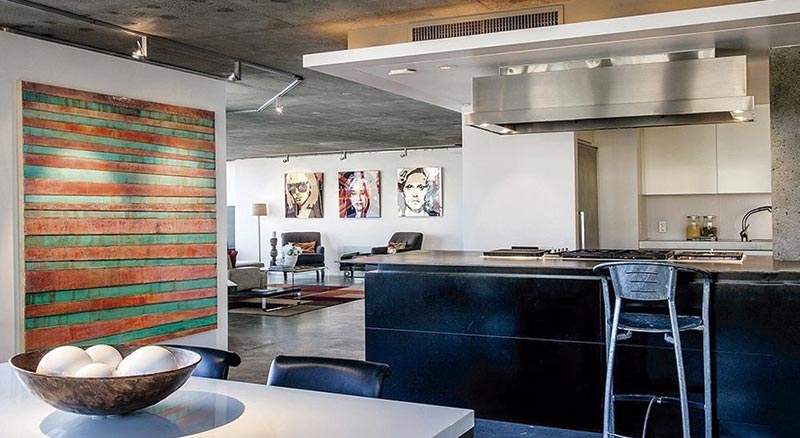


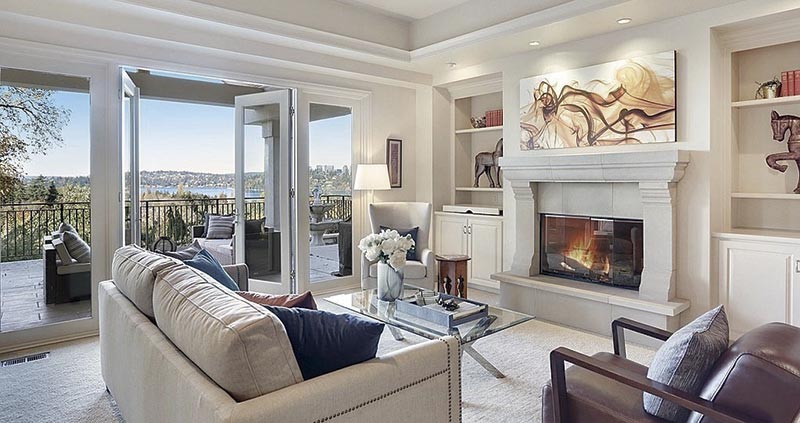

Staging + photography: the art of the image
Mendoza’s experience makes it clear that there is a need to educate the community of property owners and real estate agents so that they can visualize the competitive advantages in the market. No less important in this process is professionally documenting the staging work carried out with photography specializing in interior design. This will showcase the different environments with a sales-oriented perspective, focusing on the finish, order, and careful selection of furniture and accessories, as well as their relationship to the use of the different spaces. Only with that final stage of recording would the process of preparing a house for sale be complete.
Post-home staging photography provides undeniable value, in addition to the “before and after” comparison that homeowners and sales agents can appreciate and use to their advantage. The images that are generated are undoubtedly the main resource for promoting the property that is being sold. This professional photograph, unlike the shots we can take with a cell phone, takes into account the lighting and color temperature settings with appropriate lenses that will stand out in the communication of the final product.

Eduardo Mendoza was invited by Doble ALTURA deco magazine and Studio 002 to a working meeting with local operators. The meeting took place towards the end of November at the ADDIP coworking space in order to discuss the benefits of its implementation in Uruguay. Based on the solid foundations built over these almost 20 years of work by the expert stager, this synergy will represent a unique opportunity for our country, as this service will be offered by a team of professionals starting in 2020 throughout the country. Mendoza will return to Uruguay to lead an open workshop aimed at real estate agents and interior design professionals who want to utilize this tool, which is definitely necessary to be more competitive in the real estate market.
Below, we share an experience in Uruguay inspired by Mendoza’s work, illustrating it with “before and after” images, where, clearly and with minimal resources, the interior and exterior of this property were redesigned as a real estate marketing tool that successfully boosted its sale on the market.


No comments
Comments are closed.